Let’s turn the clocks back to 2006. Nearly ten years prior to the rapid resurgence of general aviation, a resurgence so large that the FAA rewrote the rules to accommodate the flight training surplus fighting against a lack of airworthy complex aircraft. In Salt Lake, 2006 marked the year of the Master Plan for the South Valley Regional Airport (SVR), one of three airports calling the Salt Lake Valley home. While the FAA doesn’t mandate airports make these master plans, they play an important role in understanding the current state of the airport, a forecast for what’s to come in the next 5-10 years, and how to plan to accomplish that.
In this 2006 master plan, at the cost of over a million dollars, the architects predicted an increase in the traffic at SVR. Whether it be based on the slow but steady incline in general aviation, or the reality that the Salt Lake Department of Airports, who manages not only SVR but the Salt Lake City International Airport (SLC) as well, was hell bent on pushing general aviation out of SLC, and realized those airplanes would soon need a new home, their hypothesis came true. In less than 20 years, traffic increased at the airport, hangar wait lists grew from one to over ten years, and eventually the traffic became so busy the threat of a tower at the airport became more than just a wild rumor.
The only problem with that plan was they never implemented those improvements.
Currently, the hangar wait situation at SVR is laughable. The list, previously being managed by SLCDA themselves, became too much to manage. Before they closed the doors on adding your name to the list, the brain trust figured out they could profit on this demand with non refundable fees now being required to even submit your name to the list.
So where are the hangars? No one knows. Some may wonder why a private developer hasn’t come in and taken advantage of hundreds of acres of undeveloped land. Well, let me tell you. SLCDA feels that any improvements to the airport, regardless of who bankrolls them, become property of SLCDA. Sure, you can try to lease land to build your own hangar, and if you’re lucky, your hangar will be yours for 5-10 years. After that, SLCDA owns all your improvements and reserves the right to allow you the privilege to lease the hangar that you built and paid for. Hence why there are at the most three private hangars at the airport, two owned by a business who’s likely writing off the investment, and one owned by a friend who needed a hangar ASAP and knew he made the worst business decision in his life.
Fast forward to the 2022 Master Plan. Surely at a cost of more than a million this time, the architects this time used some “acoustic sensors” in order to tell a story that the airport traffic had basically remained flat since 2005. Ask any airport tenants about traffic at SVR and multiple 360s over my house and less than polite radio communications will paint another story. Hangar tenants that have become staples in the soul of the airport are mourned when they suddenly fly too far west, and tears quickly fade into a hope that a hangar will soon be open. Still, more hangars at SLC are being bulldozed and turned into fancy jet FBOs, and with a general scarcity of hangars in the SLC valley, many airplanes and pilots find themselves without a home.
But more than a false narrative being sold to those who read these plans was the errant stupidity of SLCDA when they took their Master Plans and shared them with the public. While generally reserved for the NIMBYs who want to complain about the airport and the noise, a few brave SVR (U42 in those days) tenants attended the meeting hoping to hear news on the improvements proposed in 2006 that never came to fruition. Instead, news about the runway shifting north by a few hundred yards to accommodate the latest representative aircraft (an aircraft that likely accounts for 1% of the traffic of the airport) took precedence.
What’s even more embarrassing, is how SLCDA values the airport. When discussing the costs to move the runway, one airport neighbor questioned the airport officials on what economic impact the airport brings to the community. Quite literally, their response was that an increase in flight training would mean that a flight instructor might buy lunch at a local eatery near the airport.
Utterly embarrassed that the SLCDA officials didn’t know the true economic impact of the airport, I had to stand up. “$132 million dollars a year is what this airport brings into the local community, at the cost of $0 to the local taxpayer.” Shocked that some t-shirt wearing pilot would know such a thing, I informed the airport officials that just two years prior, the Utah Department of Transportation commissioned a study of all of Utah’s airports, and the data is freely available online.
If airport tenants weren’t embarrassed enough, one question from the crowd took the cake. Asking SLCDA officials why airplanes didn’t restrict their flight patterns to airport property (meaning turning crosswind and base over the fence and not their house), one of the officials said “there’s a website called FlightRadar24.com where you can get the owner info of the aircraft flying over your house and you should reach out to them directly.”
Their ingenuousness isn’t anything new to SVR pilots. In 2006, Leading Edge Aviation operated the FBO at the airport, providing the many services necessary to make an airport an airport. However, trying to figure out how to turn a buck on the airport, SLCDA commissioned a consultant to see where they could find a few more revenue streams. All they could find was that the lease they had signed with Leading Edge was “below market value,” and insisted they pay more for their lease. Citing the reality that there was no way to afford the increase, one last plea for some common sense to prevail was lost. Leading Edge closed their doors and left the airport FBO-less.
Trying to get out of the FBO business, SLCDA has, on three occasions, put the contract out to run the airport up for bid. Not knowing much about the financials of how to run an FBO, reviewing many of these proposals seemed to not make business sense. SLCDA would retain over 30% of all hangar lease payments, some of the fuel as well, and whomever won the bid would be required to make multi-million dollar investments into the airport that, spoiler alert, would become the sole property of SLCDA at the conclusion of the contract.
No wonder the call went unanswered.
Well, until today, where we truly set the scene. Without any input from current airport tenants, SLCDA selected local FBO operator and small charter outfit SkyShare to run the SVR FBO. Last week, airport tenants were told that in the span of 18 days, they had to schedule a meeting with the new FBO manager and sign on the dotted line. Instead of signing a lease like we all have in the past, we would be signing a “license agreement” which would put more rights on the FBO and more responsibilities on the licensee. For instance, when you sign on the license agreement, you agree to purchase a “reasonable and substantial” amount of fuel from the FBO. Better hope they get MOGAS soon. Aircraft deemed “idle” for more than 45 days can be relocated at the FBOs whim. Additional rent for common areas may be added to your license agreement as well. And Heaven help you if you’re a week late on your payments, because SkyShare will sell your assets to pay the fees for you.
All of this comes at a time where airports aren’t being built. Airport officials are using nearby airport hangar valuations to justify an over THREE FOLD increase in hangar rent, sorry, licenses. The problem with these valuations is that nearby Skypark airport is privately owned, so hangar owners actually own the land their hangar resides on, supporting the airport with annual assessments and a system of representation that includes airport tenants (unlike SLCDA). Similarly, Spanish Fork Airport’s hangar valuations are similarly skewed as the airport, while losing money thanks to a municipality that takes all tax revenue from the airport on a one way trip away from the airport, has more favorable land lease agreements than SLCDA would ever consider.
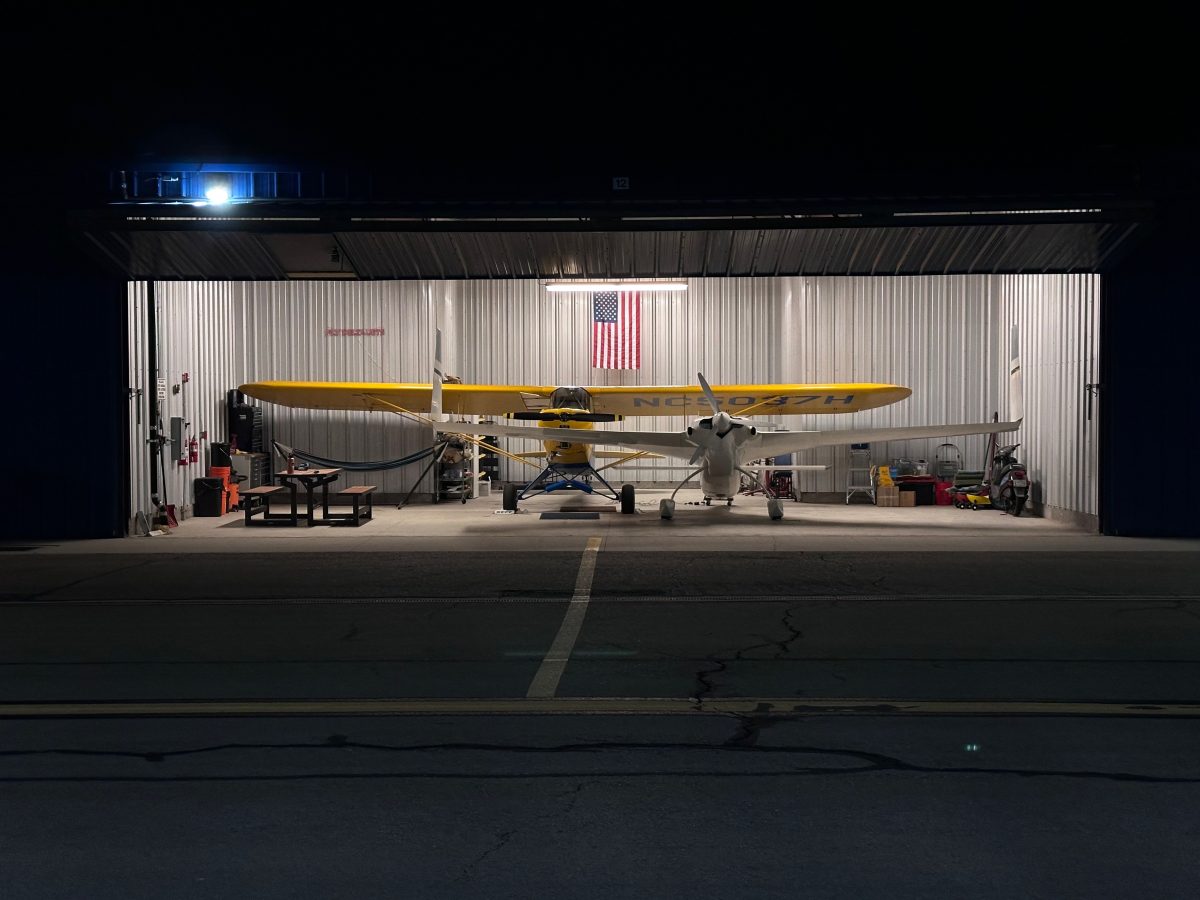
The errant mismanagement of the airport over the decades has arbitrarily created a supply shortage and demand surplus that certainly allows SkyShare to see dollar signs at SVR. What they don’t see is the soul of the airport. Across my hangar is a buddy of mine who’s accumulated over 19,000 hours flying cubs for hire. Having restored our cub ten years ago, there’s quite literally no other mechanic I trust than him. And his passion for aviation, even as he crossed through his 80th birthday, continues to inspire me when I see him carefully lift himself up atop 35” bushwheels and take his ol’ cub out for a spin. Hearing that his hangar license will cost over three times what’s he’s paid for decades, the reality that I won’t see his hangar doors open here soon is a a tough pill to swallow.
Similarly, on the backside of my hangar is one continually filled with noise. Homebuilders hell bent on flying that which their hands created tireless buck rivet after rivet yearning for that first flight to come soon. Hangar doors nearby are opened and their tenants busy helping with a few of those harder to reach ones. The rapid warmth of spring will surely open even more hangar doors, and maybe a few hangar barbecues, grilling burgers and hot dogs as many of us welcome the non-flying public into this sacred place.
But when hangar rent, or licenses, move to levels that exceed the average mortgage in the surrounding communities, decisions need to be made. A friend of mine who’s been flying their family around the backcountry for over 30 years laments “it’s been fun, but I guess it’s time.”
We never thought that the privilege to lease publicly-funded hangars would be the final nail in the coffin of our aviation passion, but it appears as though that is the case with SVR. Talking to others out there, it seems like this is the case across the country as well. Without a way for us to truly have our voices heard, or to even be a part of the conversation as to how our airports, nay, our homes, are managed, perhaps this is what is going to kill general aviation faster than leaded fuel restrictions, liability lawsuits, or ourselves.
Across my hangar is the former hangar of a friend of mine, who was unfortunately killed in an aircraft accident years ago. Aviation has been a part of his family for decades, and a hangar full of airplane projects in various states tells the tales of his father’s passion for aviation being magnified by his. I look across the taxiway and at first weep that he’s no longer there to hangar fly and talk about everything that you can squeeze out of an O-200, but smile that he’s somewhere where horribly-run outfits like SLCDA and airports like SVR don’t exist and get in the way of his passion for flight.